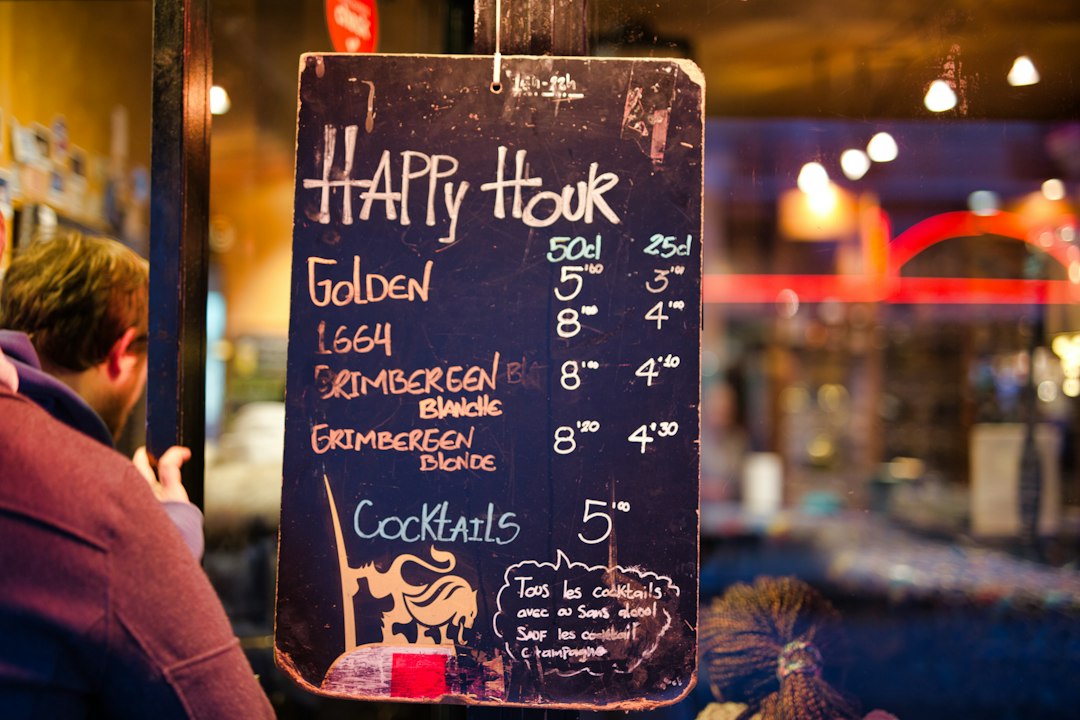

The clock is usually the first detail to confirm. A venue may start its offer before the after-work crowd arrives and end it while commuters are still leaving downtown. Some businesses apply the reduced price if the order is placed during the stated period. Others may tie the offer to a particular seating area or require guests to remain there while ordering. A group that arrives at 4:45 may have access to the promotional menu, while someone who sits down at 6:01 may receive the regular menu. Check the current listing and ask the host or bartender about the cutoff.
Arrival time becomes more important when colleagues are coming from different offices. If one person orders before the promotion ends and another orders afterward, the two checks may not follow the same pricing. Ask whether the time of the order, the time of seating, or the time the bill is closed controls eligibility. It is also useful to save a screenshot of the current menu before leaving work, especially if the listing is likely to change. That record will not override the venue’s current policy, but it gives the group a clear starting point when details on a search page are incomplete.
The word happy hour does not mean that every drink is discounted. A menu may include selected draft beer, house wine, or a short list of mixed drinks while excluding premium spirits and specialty cocktails. Food may have separate prices or its own ordering window. A prix fixe menu is a set collection of items sold for a set price, which is a different arrangement from a discount on selected items. If someone wants a particular pour or signature cocktail, ask whether it appears on the promotional menu before ordering. That quick question prevents a surprise when the receipt separates regular and reduced-price items.
Location deserves the same attention as price. Financial District is a neighborhood reference, not proof that every search result is within a few blocks of a particular office. The linked happy hour financial district result points to a cocktail venue in Flatiron, so check the street address, route, and expected travel time before sending an invitation. Search results can reflect a destination, a commute, or a broad neighborhood query. Confirm the entrance as well, since a discreet doorway or upstairs room can add time for guests who are meeting there after work.
A venue’s atmosphere and seating policy may affect the plan more than the advertised discount. Some places offer the promotion only at the bar, while tables are reserved for dinner bookings or private events. Others accept reservations during part of the evening but hold a table for a limited period. If conversation matters, ask about music volume, table placement, and whether a DJ or scheduled event will change the room. For a group considering a vinyl dj cocktail setting, confirm whether the music is part of the regular service and whether the requested seating area is available during happy hour.
The receipt can contain charges that are separate from the promotional price. Sales tax is calculated under applicable local rules, while a service charge is a venue-added fee that may be listed separately from tax and gratuity. Menu prices commonly refer to the item before those additions unless the menu states otherwise. Shared orders create extra room for mistakes: one dish may qualify for the offer, another may not, and a service charge may apply to the whole bill. Before paying, compare the receipt with the menu and ask how the service charge is distributed among the group.
A practical booking note should include the expected headcount, the earliest and latest arrival times, and the preferred seating area. Tell the venue if the gathering is for a birthday, a work meeting, or a larger group, since those details can affect table availability and timing. On the day itself, designate one person to confirm the promotion, ask for separate checks if needed, and photograph the menu only if the venue permits it. Those small steps reduce backtracking and make it easier to account for regular-price items, tax, gratuity, and any added fee before everyone leaves.