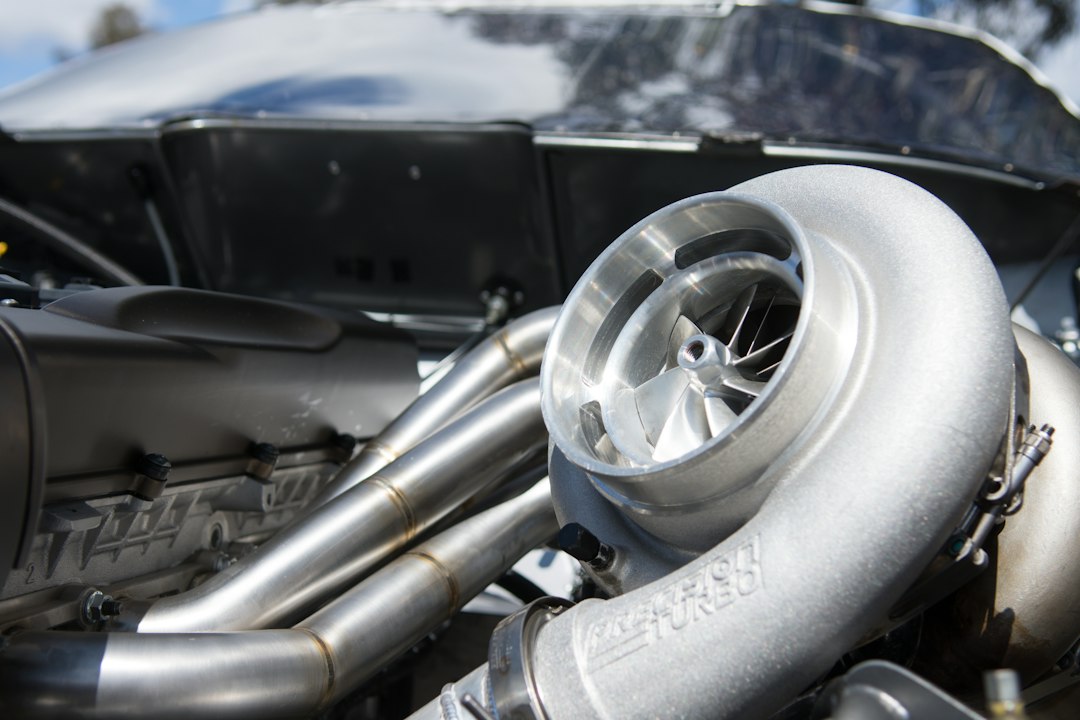

The frame names should not be treated as a simple ladder in which the next larger turbo is automatically better. A smaller unit may produce useful boost earlier and give the car stronger response during normal driving. A larger frame can provide more airflow capacity, but only if the engine has enough displacement, rpm, and supporting hardware to use it. Airflow headroom matters because a turbo operating near the edge of its compressor range may create more heat and require more shaft work. The G25, G30, and G35 can therefore suit different combinations rather than three versions of the same answer.
A compressor map gives the comparison a technical foundation. It relates engine airflow to pressure ratio, which is the absolute pressure after compression divided by absolute inlet pressure. Boost pressure by itself can mislead because the same gauge reading can represent a different pressure ratio at different elevations or inlet conditions. Plot the expected points for cruising, peak torque, and peak power, then see where they fall on the map. A supplier should explain those points in terms of your engine. If peak operation approaches an efficiency boundary, a nearby option may control heat and airflow more effectively.
The turbine side can change the result just as much as the compressor. Exhaust energy spins the shaft, while the turbine housing determines how readily that energy is converted into speed and how much restriction the engine sees. A/R, or area divided by radius, describes an important part of housing geometry. A smaller A/R may support quicker response, but it can also raise exhaust backpressure at high flow. A larger A/R may reduce restriction at high rpm while taking more exhaust energy to accelerate. Cam timing, displacement, manifold design, redline, and corner-exit response all belong in that decision.
Fitment should be documented before the order is placed. Ask the provider to confirm the turbine housing, compressor inlet and outlet sizes, wastegate arrangement, oil feed and drain requirements, and intercooler connections. Also check the exhaust manifold flange, downpipe route, compressor cover clearance, and access to service items. A useful habit is to mark those dimensions on the installation drawing and compare them with the car in the garage, rather than relying on a catalog photograph. The G Series II range is easier to assess when the turbo is treated as one part of a complete system.
Consider a modified four-cylinder that commutes through traffic and sees occasional track days. A smaller frame may reach useful boost sooner and remain more enjoyable between corners, even if a larger unit has a higher theoretical ceiling. A high-rpm six-cylinder race engine presents a different case: the G42, G45, or G55 may offer the capacity needed near the power peak, provided the exhaust system and fuel system can support it. A good recommendation should show how the choice changes with a higher rev limit, more displacement, a different manifold, or a switch in fuel. Independent turbo sizing guidance can help check those assumptions.
The selection process should continue after installation. Confirm the tuning plan for boost control, ignition timing, fuel delivery, and intake temperature, and ask whether exhaust backpressure will be measured or estimated. The wastegate and intercooler must work with the chosen frame, not merely fit around it. Keep the supplier’s recommendation, compressor-map notes, and final parts list together so changes can be traced later. Before approving the purchase, compare the proposed turbo with one smaller and one larger option, recording the expected response, airflow margin, and fitment compromises for each.