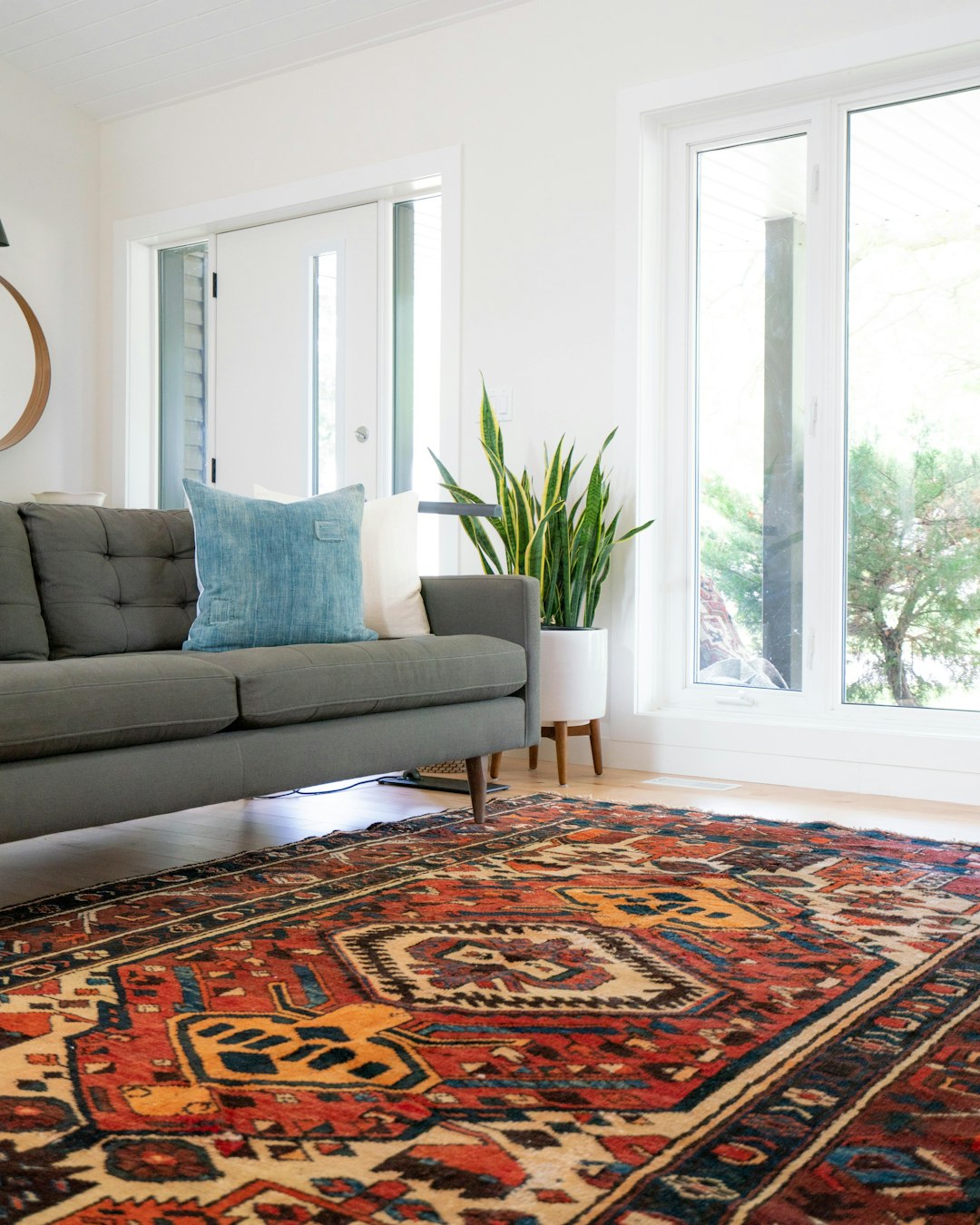

Imagine a living room with a sofa, two chairs, and a coffee table arranged around one conversation area. A rug that reaches only under the table may make each chair look disconnected, while one large enough for the sofa’s front legs and the chairs’ front legs visually ties everything together. In a dining room, measure beyond the table so chairs remain on the rug when pulled out. In a bedroom, extending the rug past the bed’s sides and foot can feel more balanced. Painter’s tape on the floor gives a useful scale check before ordering.
Material changes how a rug looks, feels, and handles ordinary use. Wool has a springy surface that can recover from compressed fibers, while cotton is often lighter and easier to move. Synthetic fibers may be practical for an entryway or family room where spills and frequent cleaning are likely, although construction still varies. Fiber means the material itself; weave describes how that material is formed. A flatweave is tightly woven with little raised surface, while a tufted rug has loops or cut fibers anchored into backing, creating more texture and cushion.
Pile height is the thickness of a rug’s visible surface, and it involves a practical trade-off. Low-pile rugs usually slide more easily beneath doors, dining chairs, and robot vacuums. Medium or high pile can feel warmer beside a bed, but it may show footprints and demand more vacuuming effort. Shag has especially long fibers that can trap crumbs and make furniture less stable. A low-pile runner may suit a busy hallway, while a softer, deeper rug may be more comfortable in a bedroom where easy movement matters less.
Backing adds structure, but it does not automatically keep a rug stationary on every surface. A separate rug pad can improve grip, reduce bunching, and add modest cushioning. It should be close to the rug’s dimensions rather than leaving a broad visible border. On finished wood, inspect the pad’s care guidance and avoid materials that feel sticky or could leave residue during prolonged contact. This is also where wood flooring guidance can help frame the decision: a pad that works on one floor may not be suitable for another.
Online photographs create another source of confusion. A beige rug can look warm under one room’s daylight and gray beneath another room’s bulbs, wall paint, and surrounding wood. A close-up image may reveal whether the pattern is sharply printed, subtly varied, or created by contrasting fibers. Consider a hypothetical family with a pale sofa and dark wood floor. A muted pattern could hide small marks without competing with the furniture, while a sample, if available, would provide a better sense of texture and color than a screen alone.
Before placing an order, confirm the listed dimensions, construction, care instructions, and shipping details. Measure door clearances, furniture legs, thresholds, and vents that might be covered. A rug that looks good in a staged photograph can bunch at a doorway or block a door in an actual home. When comparing area rugs online, consider how each option will interact with the existing floor, furniture, traffic, and cleaning routine. That short checklist usually produces a more useful choice than sorting by appearance alone, especially when the rug needs to work every day.